Facebook ads for chiropractors are most effective when built around education and trust, not discount offers or direct sales pressure. Chiropractic patients rarely book on impulse. They research, compare, and need to feel confident before they walk through your door. Monthly ad spend for solo practitioners typically runs $500–$1,000, with multi-doctor clinics investing up to $3,000. That budget works hardest when your creative warms prospects early in their decision process, and your campaign is set up to convert leads into booked appointments, not just form fills.
1. What creative types make chiropractic Facebook ads work?
Educational content and authentic storytelling consistently outperform sales-heavy messaging in chiropractic advertising. Patients want to understand their condition before they trust anyone to treat it. Your ad creative is the first handshake.
The creative formats that convert best for chiropractic practices include:
- Short educational videos explaining common conditions like sciatica, tech neck, or herniated discs. A 60-second clip showing what causes lower back pain builds more trust than any discount offer.
- Patient testimonial videos recorded at the clinic, in natural lighting, with real patients speaking in their own words. Polished production is not the goal. Authenticity is.
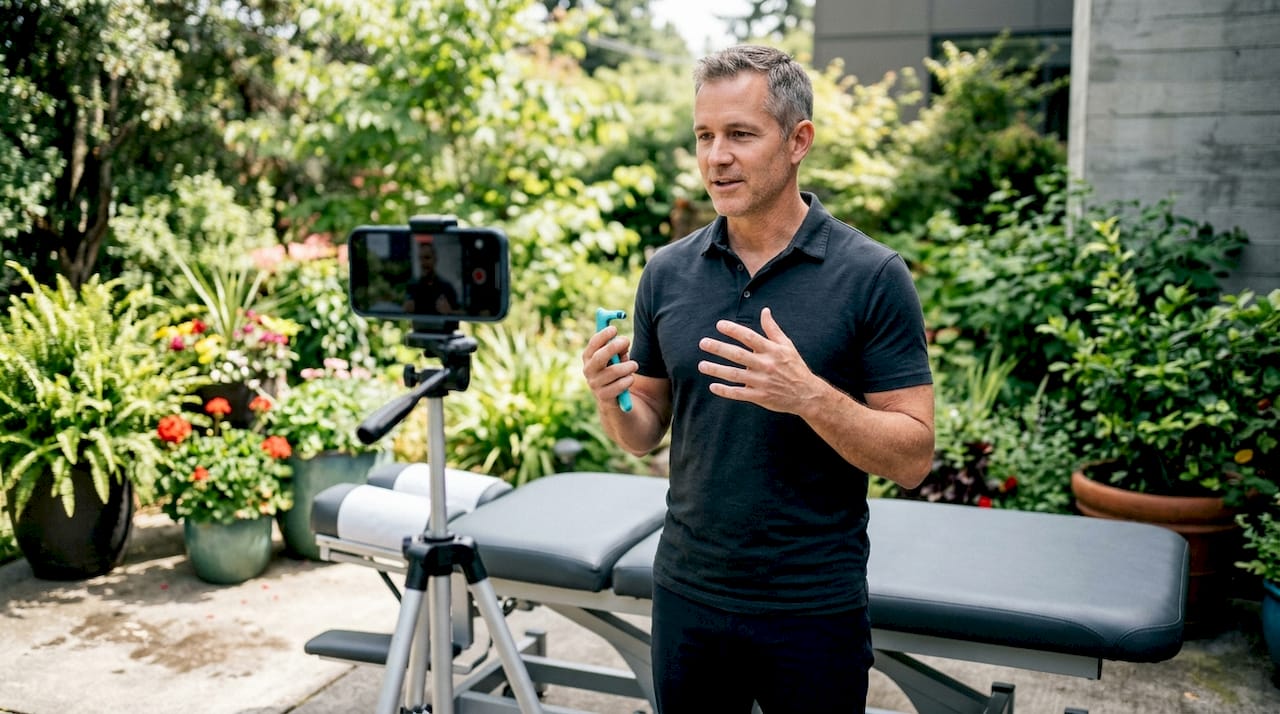
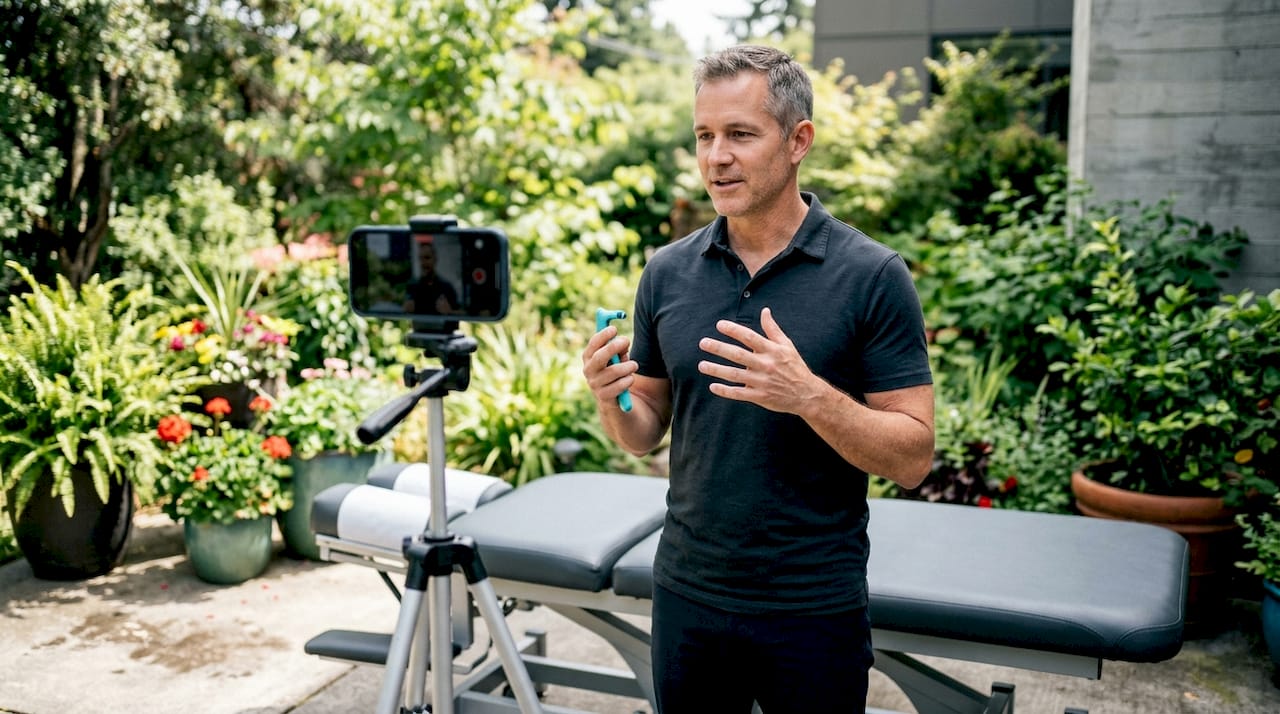
- Doctor introduction videos where you speak directly to camera, explain your approach, and show the clinic environment. Patients want to know who they are seeing before they book.
- Condition-specific offer ads that pair a clear problem statement with a low-friction next step, such as a free spinal assessment or a new patient consultation at a fixed price.
- Behind-the-scenes content showing adjustments, patient interactions, and daily clinic life. This format builds familiarity fast.
Video outperforms static images for chiropractic ads consistently. Clinic-shot footage beats stock photography every time, because stock images of red glowing spines signal generic advertising to anyone who has scrolled Facebook for more than five minutes.
Pro Tip: Film three to five short videos in a single afternoon using just a smartphone. Rotate them across ad sets so Meta’s algorithm has diverse creative to test against your local audience.
2. How to target the right audience for chiropractic ads
Meta’s Andromeda algorithm has largely moved past manual interest targeting. Stacking interests like “back pain” or “wellness” does not give you the edge it once did. The algorithm now reads creative quality and geographic constraints to find the right people.
The most effective targeting approach for chiropractic Facebook advertising focuses on:
- Geographic radius targeting set to your realistic patient catchment area, typically 5–15 miles from the clinic. Tighter radius means less wasted spend on people who will never drive to you.
- Broad audience delivery with creative doing the heavy lifting. Let Meta identify who responds rather than manually restricting the audience with layered interests.
- Audience-specific creative angles built for distinct patient profiles: office workers with postural problems, athletes managing sports injuries, parents dealing with pregnancy-related back pain, and seniors with chronic joint issues. Each group responds to different hooks.
- Retargeting warm audiences with testimonial and case study content. Anyone who watched 50% of your educational video is a warm lead. Show them a patient success story next.
The shift here is counterintuitive. Giving Meta more creative variety and fewer audience restrictions actually improves results. Running multiple concurrent ad sets with diverse creative lets the algorithm segment your local audience automatically, finding patterns you would never identify manually.
3. Optimizing campaigns for booked appointments, not just leads
Optimizing for lead form submissions alone attracts low-commitment prospects and produces high no-show rates. The fix is to shift your campaign’s conversion goal upstream, toward booked appointments and completed treatment plans.
Here is a practical framework for conversion-focused campaign management:
- Set your conversion event to appointment bookings, not lead form completions. If your booking system connects to Meta via pixel or API, use that event as your primary optimization signal.
- Add qualification questions to your lead form or landing page. Ask about the patient’s primary complaint, how long they have had it, and whether they have seen a chiropractor before. This filters out bargain seekers before they enter your pipeline.
- Follow up within 5 minutes of every lead submission. Rapid follow-up is the single biggest lever for improving show rates from social media leads, because intent on Facebook is lower than on Google.
- Use the Conversions API (CAPI) to send offline data back to Meta. When a booked appointment or completed treatment plan fires as a conversion event, the algorithm learns to find more patients who behave the same way.
- Measure cost-per-treatment-plan patient, not cost-per-lead. Shifting to this metric changes how you evaluate creative, targeting, and budget allocation entirely.
Pro Tip: Avoid free consultation offers as your primary hook. They attract people who want something for nothing. A low-cost new patient assessment ($27–$47) filters for commitment and still converts well.
The table below shows how the two measurement approaches differ in practice:
| Metric | What it measures | Why it matters |
|---|---|---|
| Cost-per-lead | Form fills or clicks | Easy to track, but includes no-shows and unqualified prospects |
| Cost-per-booked appointment | Confirmed calendar slots | Filters for intent; closer to real revenue |
| Cost-per-treatment-plan patient | Patients who complete care | True ROI signal; what the algorithm should optimize toward |
4. How Facebook ads fit into a multi-channel patient acquisition strategy
Facebook ads perform best as top-of-funnel tools that warm audiences who are not yet ready to book. They build familiarity and trust before a potential patient types your clinic’s name into Google. Understanding this role prevents the common mistake of expecting Facebook to behave like a direct-response search channel.
A practical multi-channel breakdown for chiropractic practices looks like this:
- Facebook and Instagram ads: Build awareness and trust with educational and testimonial content. Best for reaching people who do not yet know they need a chiropractor.
- Google Ads: Capture active demand from people searching “chiropractor near me” or “back pain relief [city].” Higher intent, higher cost-per-click, but faster to convert.
- Email marketing: Retain existing patients, promote referral programs, and re-engage lapsed patients. Low cost, high return on existing relationships.
- Local SEO: Supports all paid channels by giving your clinic credibility when prospects research you after seeing an ad.
Combining Facebook with Google Ads and email marketing delivers more sustainable practice growth than any single channel alone. Facebook lowers your Google Ads cost-per-lead over time by making your clinic name familiar before patients search for it.
| Channel | Primary role | Time to results |
|---|---|---|
| Facebook/Instagram ads | Awareness and trust building | 4–8 weeks |
| Google Ads | Active demand capture | 1–2 weeks |
| Email marketing | Retention and referrals | Ongoing |
| Local SEO | Authority and discoverability | 3–6 months |
5. Common mistakes that kill chiropractic Facebook ad performance
Most underperforming chiropractic ad campaigns share the same handful of problems. Recognizing them early saves budget and time.
- Relying on free consultation offers as the primary call to action. Free attracts the wrong patient profile and trains your audience to expect discounts rather than value.
- Using stock photography, especially the clichéd red-highlighted spine images. These visuals signal generic advertising and get scrolled past instantly.
- Skipping video entirely. A clinic that runs only static image ads in 2026 is leaving its most powerful creative format unused.
- Optimizing for lead volume instead of appointment quality. A campaign generating 100 leads with 10 show-ups is worse than one generating 40 leads with 30 show-ups.
- Micromanaging the algorithm. Changing targeting, budgets, or creative every few days resets Meta’s learning phase and prevents the system from finding your best patients.
Ads with an education-first mindset consistently outperform sales-heavy messaging. The creative shift from “Book now, 50% off” to “Here is what causes your lower back pain” is the single most impactful change most chiropractic practices can make.
Pro Tip: Run a creative audit every 30 days. Pull your top three ads by cost-per-booked-appointment and identify the hook, format, and patient profile each one speaks to. Double down on what works.
Key takeaways
Facebook ads for chiropractors work best when creative educates first, campaigns optimize for booked appointments rather than raw leads, and Facebook plays its proper role as a trust-building channel that supports Google Ads and local SEO.
| Point | Details |
|---|---|
| Education beats sales pressure | Ads that explain conditions and treatments attract higher-quality patients than discount offers. |
| Video is non-negotiable | Authentic clinic-shot video outperforms static images and stock photography consistently. |
| Optimize for appointments, not leads | Measure cost-per-booked-appointment and use CAPI to train Meta’s algorithm on real conversions. |
| Geographic targeting is the anchor | Set a realistic radius and let creative quality drive audience optimization rather than interest stacking. |
| Facebook supports, not replaces, Google | Use Facebook to warm audiences early; use Google Ads to capture patients ready to book. |
What I have learned about chiropractic Facebook advertising
The chiropractors who get the best results from Facebook advertising share one trait: they treat their ads like a patient education program, not a coupon machine. The practices that struggle are almost always the ones chasing the cheapest lead, running the same static image for six months, and wondering why their no-show rate is 60%.
The education-first approach feels slower at first. You are not asking for a booking in the first five seconds of a video. You are explaining what sciatica actually is, or showing a real patient describe how their life changed after treatment. That content builds the kind of trust that makes someone pick up the phone rather than just scroll past.
The other thing I see consistently is that patience with the algorithm pays off. Meta needs time and data to find your best patients. Giving it diverse creative, a tight geographic radius, and offline conversion signals via CAPI is how you get there. Clinics that let the system run for 60–90 days with consistent creative and proper conversion tracking almost always see cost-per-patient drop meaningfully over time.
The metric that changes everything is cost-per-treatment-plan patient. Once you stop celebrating cheap leads and start measuring what it actually costs to acquire a patient who completes care, your entire campaign strategy sharpens. Budget decisions, creative choices, and follow-up processes all get clearer when that is the number you are watching.
How Socialfuel helps chiropractors build better ad campaigns
Chiropractic practices that want to build a real patient acquisition system, not just run ads, need intelligence behind every creative decision.
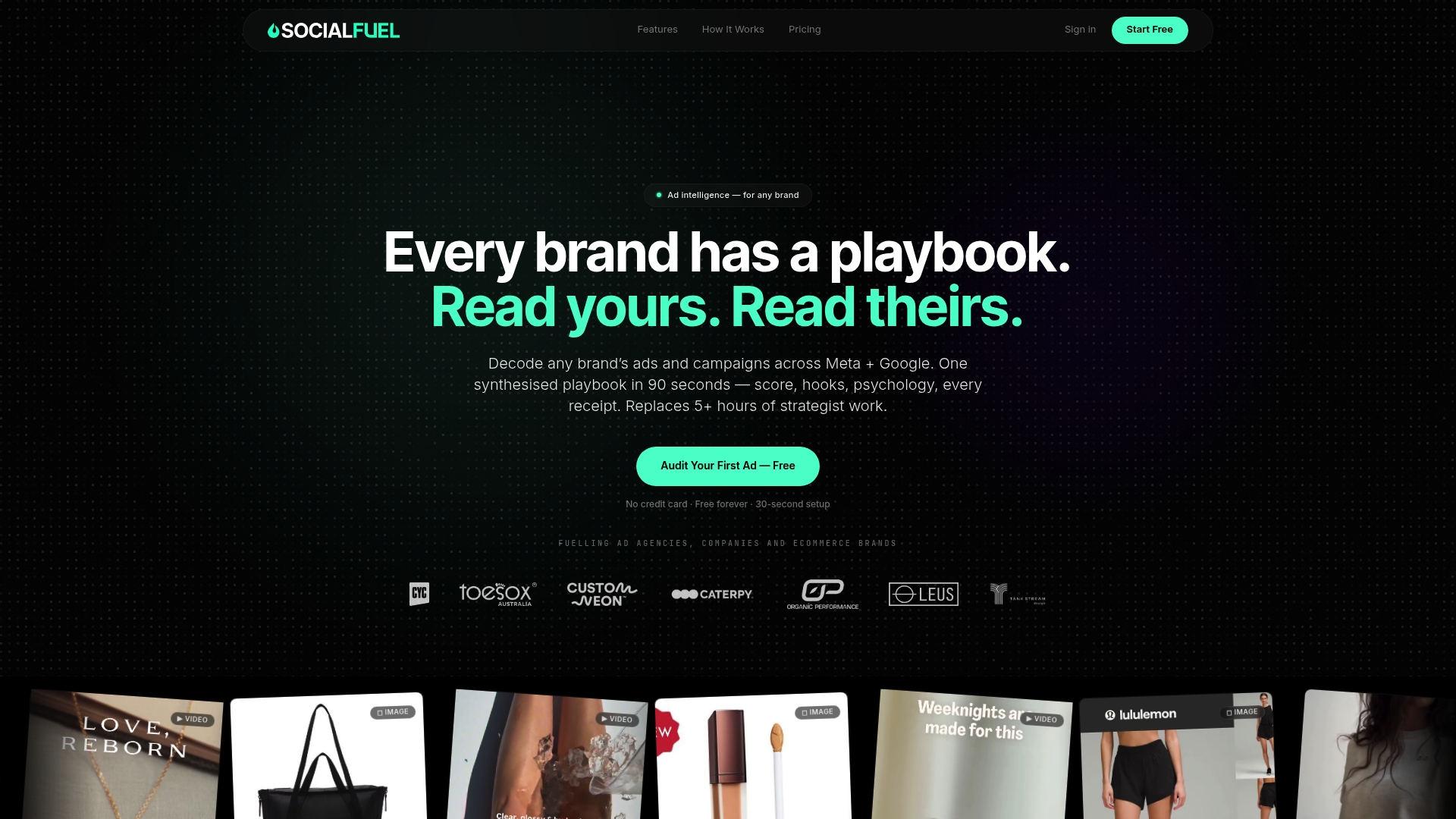
Socialfuel is an AI-powered ad intelligence platform that lets you search any brand, keyword, or URL to find winning Facebook and Instagram ads across your market. You can decode the hooks, creative angles, and campaign structures that are already working for high-performing clinics, then use those insights to brief your own creative and build campaigns that convert. Whether you are starting your first chiropractic Facebook ad campaign or auditing an existing one, Socialfuel gives you the competitive playbook to move faster and spend smarter.
FAQ
How much should a chiropractor spend on Facebook ads?
Solo practitioners typically spend $500–$1,000 per month, while multi-doctor clinics invest up to $3,000. The right budget depends on your patient acquisition goals and local market competition.
What type of Facebook ad works best for chiropractors?
Short educational videos and authentic patient testimonials consistently outperform static images and discount-based offers. Authenticity matters more than production quality.
How long does it take to see results from chiropractic Facebook ads?
Most campaigns need 4–8 weeks to exit Meta’s learning phase and deliver reliable cost-per-appointment data. Changing creative or targeting too early resets this process.
Should chiropractors use interest targeting on Facebook?
Meta’s algorithm now relies more on creative quality and geographic targeting than manual interest stacking. Broad audiences with strong creative outperform heavily layered interest targeting in most cases.
What is the most important metric for chiropractic Facebook ads?
Cost-per-treatment-plan patient is the metric that most accurately reflects campaign ROI. Cost-per-lead is easy to track but includes no-shows and unqualified prospects that never generate revenue.