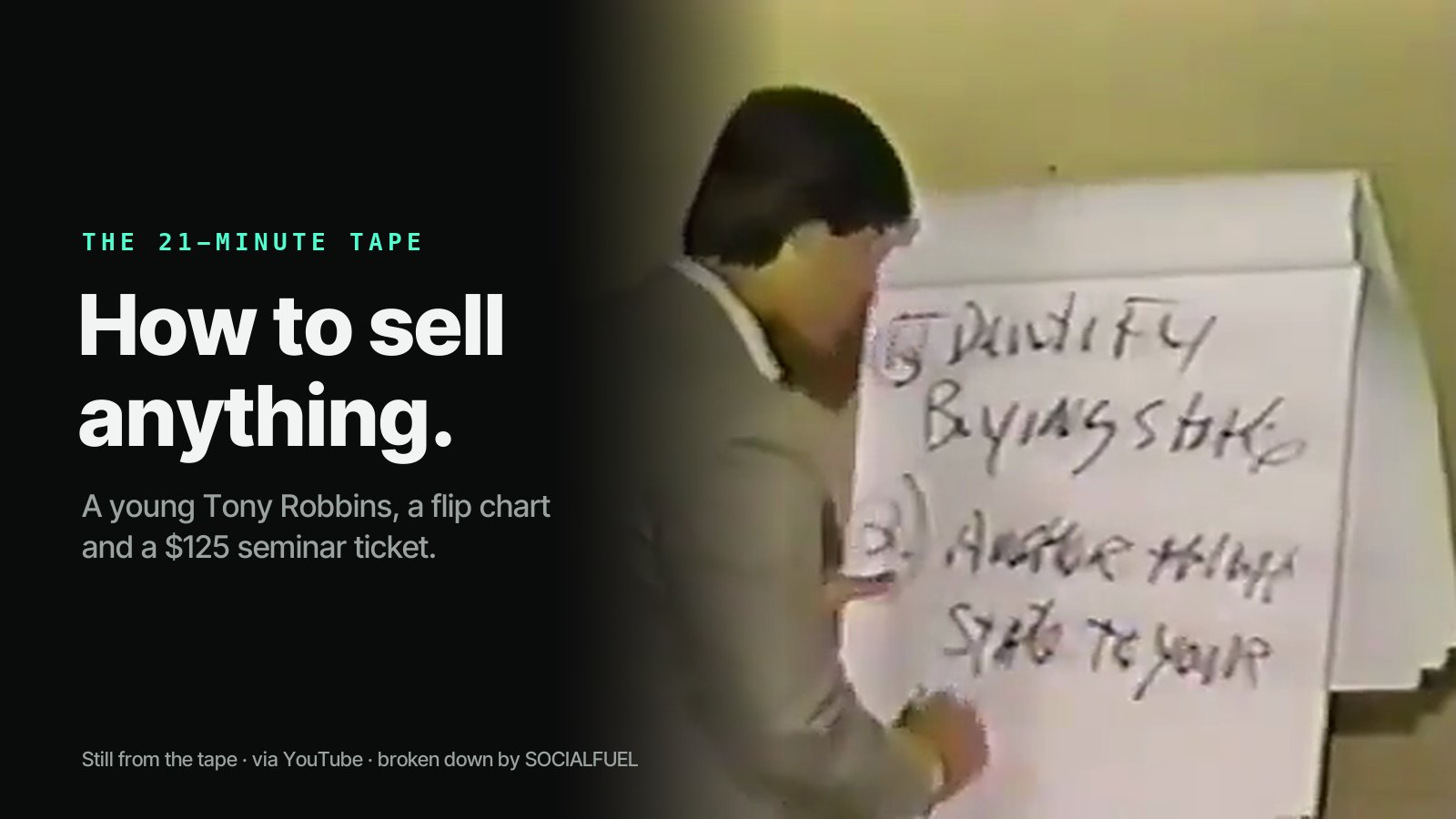
Long before the stadium tours, a young Tony Robbins stood at a flip chart and taught a room how to get people to say yes. What they were selling was a seat at his seminar. The ticket was $125.
The tape runs 21 minutes and it's the cleanest breakdown of persuasion I've come across. Watch it first, then use the notes below to put it to work in your ads, your landing pages and your follow-ups.
The short version
- Persuasion is two moves: find the state someone buys in, then attach your offer to that state.
- He draws it as a football field. Rapport and finding their needs take 40 yards. Logic gets 10.
- People say they don't have the time or the money. The real reason is they don't believe it's worth it yet.
- Handle the objection before it's raised. His favourite way is to confess you once made the same mistake.
- A no isn't the end. To him it means you haven't put them in the right state yet.
Two moves, and the rest is garbage
He opens by throwing out most sales training. Scripts, lines, say this and do that. His verdict: "that's all garbage."
What's left is two steps. First, identify the buying state, which is how someone feels when they're ready to say yes. Second, anchor that state to your product, so the feeling and the offer turn up together. He compares it to Pavlov and the dogs.
The rest of the tape is how to do those two things with a real person in front of you.
The football field
Early on, he maps a pitch onto a football field. What matters is the split.
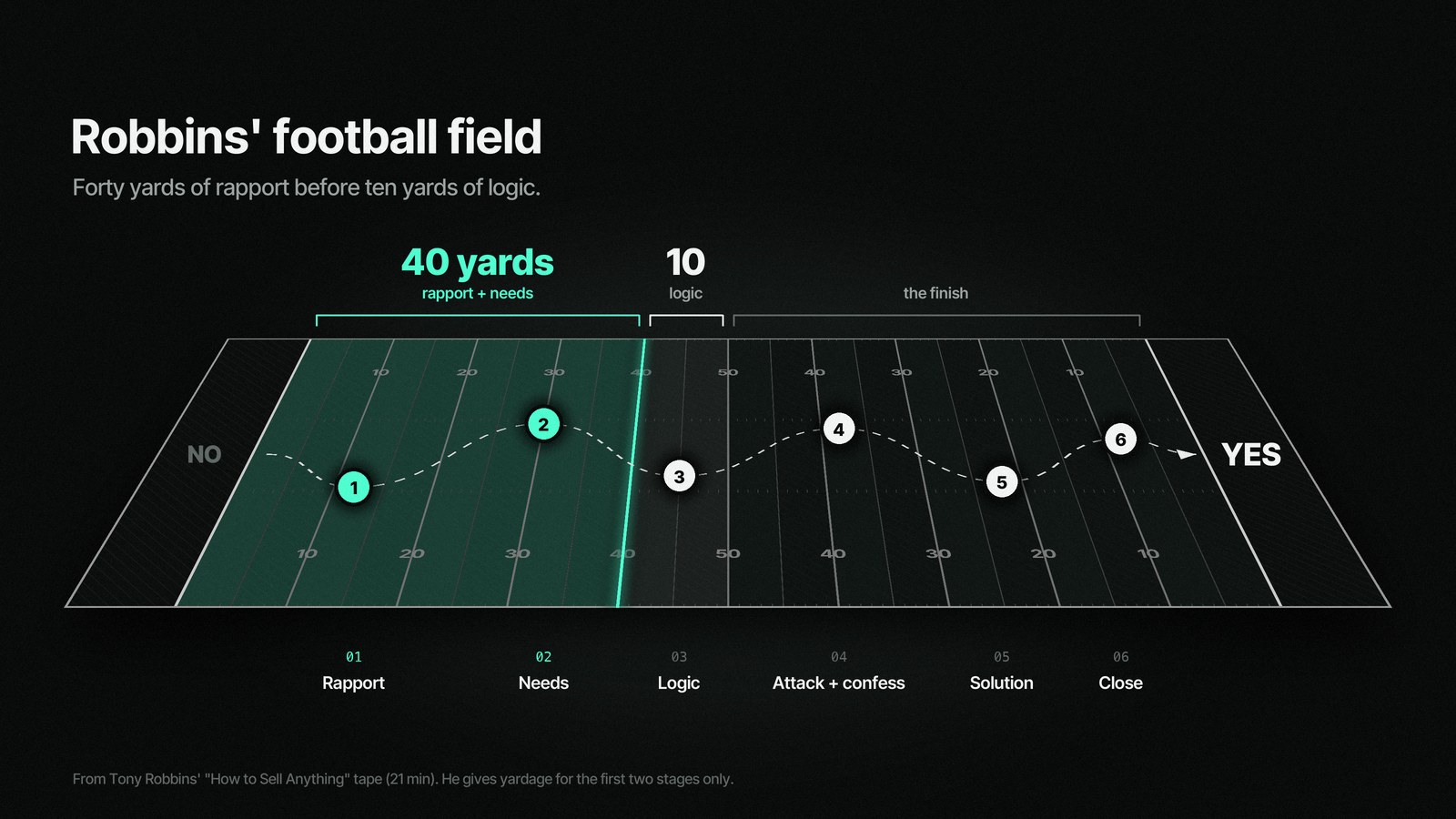
Forty yards go to rapport and finding out what the person needs. Ten go to logic: the price, the date, the address. Most pitches run it the other way round, with a quick hello and then a wall of features.
1. Rapport: get a "me too"
He wants the other person thinking "me too". The reaction he warns about is "so what".
His example is someone gushing about the seminar: the coals felt like meeting God, like surfing an incredible wave in Maui. The listener just thinks "so what", because nobody asked about their life first. Talking about your experience before you know theirs kills the sale before it starts.
In your ads: the first line has to sound like their life. Open on the problem in the words your customer actually uses, and they stop scrolling because they recognise themselves.
2. Needs: ask, then ask again
With rapport, people tell you things they wouldn't tell anyone else. His question is simple: "If you could change anything in your life right now, what would you change?"
When they say nothing, he keeps going. "Well, if it could be better, how would it be better?" Sooner or later you get something real, like earning more or getting on better with the boss.
In your ads: you can't ask a feed a question, so do the asking before you write. Read reviews, comments and the ads already running in your category. An ad that's been live for months is a record of what your market keeps saying yes to. Here's how to find those ads.
3. Logic: ten yards, then assume the sale
Logic and reason get a few details and no more. In his example it's $125, here's the date, here's the place. "Get a pencil. Write this down."
He never asks if they want to go. If you've found a real need and you can fill it, he says you have the right to assume the sale. And while they're writing down the address, they're already committing to being there.
In your ads and pages: the price, the offer and the next step belong in one short, plain block. State the price and move on. We counted how often live ads lead with a discount, and how long those ads last, in this study of 861 ads.
4. Attack and confess
This is the part people rewatch.
He says there are basically three objections. I don't have time. I don't have money. And the real one under both: they don't believe it's worth it yet. People lead with time, he says, because they'd rather not admit it's money.
So you deal with it before it comes up. One way is to attack the principle, never the person: can you believe some people say they don't have time for the thing that would fix their relationship? Once someone has agreed with you on that, they can't really use the excuse a minute later.
The better way is to confess. He tells a story about putting it off himself, waiting months to go when he could have gone straight away. "I can't even imagine the amount of time I lost." Nobody argues with your own regret.
In your ads: answer the objection inside the creative. A founder saying "I put this off for two years and I wish I hadn't" lands harder than another feature list, and it takes the excuse off the table before the viewer reaches for it.
5. Solution: the heaven if you do
Then he paints the after, as one specific moment. Coming home, your partner hears your voice, and their face lights up. He's open that the flip side works too, "the hell if you don't", because people will work harder to avoid a loss than to get a gain.
In your ads: show the after as one scene someone can picture. If you use the fear side, keep it honest.
6. Close: bring it together
To him, closing just means bringing the pieces together. He says "fill this thing out, and I'll set it up", then asks who else would want to come. The second question is the clever one. The moment she starts naming friends, she's already said she's going.
In your funnel: write the call to action like the decision's already made, then ask for the next small step, like which option they'd pick or who they'd bring.
The whole game is state
Under all six steps sits one idea: people decide from how they feel in the moment. So put them in the state they've bought in before. He has people remember a decision they knew was right, then asks what it would be like to feel that way about this.
He calls it a train on a track. Get yes after yes and the momentum builds, until turning around at the end takes more effort than one more yes.
And when someone says no? "No does not mean no. It just means I need more information." To him it means you haven't got them in the right state yet.
For ads, that's your sequence. The first ad earns the "me too". Retargeting covers the needs and the logic. The follow-ups handle the confession and the after. Every step is one more small yes.
What's dated, and what isn't
It's a tape from decades ago, so a few bits haven't aged well. He tells people to write a cheque on the spot. He also cites an insurance industry study saying top salespeople made the sale after the fifth no, without naming the study. That stat gets repeated a lot and I couldn't find a source for it, so treat it as a story rather than data.
"Don't accept the word no" needs the guardrail he gives it himself: it only works if you're sincere and you're filling a real need. Without that it's just pressure, and people can feel it.
The rest holds up. Rapport first. Find the need. Keep the logic short. Deal with the objection before it's said. Show the after. Ask like it's decided.
FAQ
What is Tony Robbins' "How to Sell Anything" video? A 21-minute training tape from early in his career. Using a flip chart and live examples, he teaches a room how to persuade people to attend his seminar, which cost $125 at the time.
What does "attack and confess" mean? Handling an objection before it's raised. You either attack the principle behind the excuse (never the person), or confess that you once made the same mistake and what it cost you.
What objections does Tony Robbins say you'll hear? No time and no money. He says the real reason under both is that the person doesn't believe it's worth it yet.
What is the persuasion football field? His map of a pitch: 40 yards for rapport and needs, 10 for logic and reason, then attack and confess, solution and the close.
Does this work in ads, not just face to face? The ideas carry over once you translate them. An ad can't ask questions, so the needs work happens in your research, and the order of your ads does the rest: the hook builds rapport, retargeting carries the logic, and follow-ups handle the objections.
See it working in your market
The fastest way to learn this is to watch it working. Paste any brand into SOCIALFUEL to see their live ads, long-runners first, with the hook, angle, offer and audience decoded. Free to start.