
Life insurance Facebook ads are paid social campaigns that use Meta’s behavioral and life event data to reach prospects at the exact moment their coverage needs spike. 62% of adults use social media to research financial or insurance products, making Facebook the highest-reach channel for life insurance lead generation in the United States. That reach means nothing without precise targeting and strong lead qualification. The marketers who win on this channel combine life event signals, qualified lead forms, and compliance-friendly creative to generate leads worth pursuing.
1. Why life event targeting is the foundation of life insurance Facebook ads
Facebook’s life event targeting is the single most powerful tool available for life insurance social media campaigns. It lets you reach people at the exact moment their insurance needs become real, not hypothetical.
The platform’s targeting categories most relevant to life insurance include:
- New parents — a newborn creates immediate demand for term life coverage
- Newly engaged or recently married — joint financial responsibility triggers policy reviews
- New homeowners — mortgage protection coverage becomes a priority
- Recent job changers — employer group coverage gaps create individual policy demand
- Approaching retirement — whole life and final expense products become relevant
Facebook’s life event targeting lets you layer these signals on top of income brackets, homeownership status, and parenting interests. That combination narrows your audience from millions of scrollers to a few thousand high-intent prospects. Smaller audiences with tighter relevance consistently outperform broad demographic blasts in insurance campaigns.
Your ad copy should mirror the life event directly. An ad targeting new parents that opens with “Just had a baby? Here’s what most parents forget about financial protection” will outperform a generic “Get a free life insurance quote” every time. The hook must match the moment.
Pro Tip: Build separate ad sets for each life event category rather than combining them. This lets you write event-specific copy and measure which life milestone drives the lowest cost per qualified lead.
2. How to qualify leads inside Facebook lead forms
Lead volume is a vanity metric in life insurance. A hundred unqualified leads cost more to work than ten qualified ones. The fix lives inside your lead form design.
Facebook Lead Ads offer two form types worth understanding:
- More Volume (standard form) — fast to complete, high submission rate, low intent signal
- Higher Intent form — adds a review screen before submission, which reduces lead volume by 20–30% but increases lead quality by 40–60%
That tradeoff is almost always worth it for life insurance. A smaller pool of people who confirmed their submission is far more valuable than a large pool of accidental clicks.
Beyond the form type, add 2–3 qualifying questions to every lead form. Adding qualifying questions doubles lead quality by filtering out low-intent prospects before they enter your CRM. Strong qualifying questions for life insurance include:
- “Are you currently covered by a life insurance policy?”
- “What is your primary reason for exploring coverage?” (with multiple choice options)
- “What coverage amount are you considering?” (with ranges like “$250,000–$500,000”)
These questions do two things. They filter out browsers, and they give your sales team context before the first call. That context shortens the sales conversation and raises close rates.
Pro Tip: Use the “Appointment Request” question type in Facebook Lead Ads to let prospects schedule a call directly. This pre-qualifies intent and eliminates the cold-call dynamic entirely.

Your ad copy can also pre-qualify before the form. Headlines like “For families earning $75,000+ looking for term coverage” signal who the ad is for and who it is not. Self-selection in the copy reduces form submissions from poor-fit prospects.
3. Creative strategies that build trust and stay compliant
Life insurance advertising on Facebook falls under the Special Ad Category for financial products. This restricts certain targeting options and demands that your creative avoid discriminatory or misleading claims. Compliance is not optional, and violations result in ad rejections or account restrictions.
The good news is that compliant creative tends to perform better anyway. Educational, product-neutral messaging like free retirement guides or myth-busting content attracts qualified leads while avoiding the aggressive sales tone that triggers both policy flags and consumer skepticism.
Effective creative formats for targeted life insurance ads include:
- Short-form video (30–60 seconds): Educational myth-busting videos perform best. A video that opens with “Most people think life insurance costs $100 a month. Here’s what it actually costs” generates curiosity and positions you as a trusted source.
- Single image ads with situation-specific photography: A photo of a young couple reviewing documents at a kitchen table outperforms a generic stock image of a handshake. Authenticity in imagery builds the emotional connection that insurance decisions require.
- Carousel ads for product education: Use each card to address a different objection or coverage type. This format works well for prospects in the research phase.
Headlines and calls to action should focus on relief and clarity, not pressure. “See what coverage fits your family” converts better than “Get a quote now” because it frames the next step as helpful rather than transactional. For more on image ad performance, the principles of contrast, context, and authenticity apply directly to insurance creative.
4. Budgeting and campaign structure for peak performance
The most common mistake in digital marketing for life insurance on Facebook is underfunding campaigns and then pulling them before the algorithm has enough data to work. Meta’s delivery system needs time and volume to find your best prospects.
| Approach | Budget per ad set | Minimum run time | Expected outcome |
|---|---|---|---|
| Underfunded | Under $10/day | Under 7 days | Algorithm never exits learning phase |
| Recommended | $20–$30/day | 7–10 days minimum | Algorithm optimizes delivery effectively |
| Scaled | $50+/day | Ongoing | Consistent lead flow with audience expansion |
Budget at the ad set level, not the campaign level. Each ad set targeting a different life event needs its own daily spend to generate enough data independently.
Campaign structure matters as much as budget. Simplified campaigns grouped by product type outperform fragmented setups because Meta’s machine learning algorithm needs consolidated data to find patterns. One campaign for term life, one for whole life, and one for final expense is cleaner and more efficient than ten micro-campaigns split by age, gender, and zip code.
Ad fatigue is a real threat in insurance campaigns because the sales cycle is long. Refreshing ad creative weekly maintains engagement and prevents frequency-driven performance drops. Keep a rotation of three to five creative variants per ad set and swap the weakest performer each week.
5. Measuring and optimizing for lead quality, not just volume
The metrics that matter in life insurance Facebook campaigns are not click-through rate or cost per lead in isolation. They are qualified lead rate, contact rate, and downstream conversion to policy.
Track these data points at the campaign level:
- Qualified lead rate: What percentage of form submissions meet your criteria (age, income, coverage interest)?
- Contact rate: What percentage of leads answer the phone or respond to outreach?
- Appointment set rate: Of contacts made, how many agree to a consultation?
- Policy conversion rate: Of consultations, how many result in a sold policy?
Leads contacted within five minutes convert at significantly higher rates than those contacted hours later. Speed to contact is one of the highest-leverage variables in your entire funnel, and it costs nothing to fix. Set up automated SMS or email follow-up to trigger the moment a lead submits a form.
Integrate Facebook’s Conversions API alongside the standard pixel to capture downstream events like phone calls, appointments, and policy sales. This data feeds back into Meta’s algorithm and trains it to find prospects who resemble your actual buyers, not just your form submitters. For a deeper look at tracking and reporting tools, the principles of attribution and event mapping apply directly here.
Pro Tip: Create a custom conversion event for “qualified lead” in Meta Events Manager. Define it as a lead who answered a call within 24 hours. Feed this event back to your campaign and switch your optimization goal from “lead” to “qualified lead” once you have 50 events. Your cost per acquisition will drop.
Facebook life insurance campaigns also require patience at the brand level. Building brand recognition through consistent Facebook presence takes 4–6 months before it translates into inbound leads. Treat early campaigns as data collection, not just lead generation.
Key Takeaways
The most effective life insurance Facebook ads combine life event targeting, Higher Intent lead forms, and educational creative to generate qualified leads that convert at a profitable rate.
| Point | Details |
|---|---|
| Life event targeting drives relevance | Target new parents, homeowners, and job changers to reach prospects when coverage needs are highest. |
| Lead form design determines quality | Use Higher Intent forms and 2–3 qualifying questions to double lead quality and reduce wasted follow-up. |
| Compliant creative builds trust | Educational, product-neutral messaging avoids ad rejections and outperforms aggressive sales copy. |
| Budget and structure enable optimization | Spend $20–$30 per ad set daily and group campaigns by product type to help Meta’s algorithm perform. |
| Speed to contact is a conversion lever | Contacting leads within five minutes significantly raises appointment and policy conversion rates. |
The compliance trap most insurance marketers fall into
Working with life insurance Facebook campaigns long enough teaches you one uncomfortable truth: most marketers treat compliance as a constraint and creativity as the solution. They are actually the same thing.
Every time a client pushed me toward aggressive “Get your free quote NOW” copy, the ads either got rejected or generated leads who had no idea what they signed up for. The campaigns that consistently produced profitable leads used the kind of messaging a trusted financial advisor would use at a dinner party. Calm, educational, specific to a real life situation.
The Special Ad Category restrictions that frustrate so many advertisers actually force better creative. When you cannot micro-target by age or zip code, you have to write copy that resonates broadly. That discipline produces ads with stronger hooks and clearer value propositions. The Meta Ad Library is one of the best places to study what compliant, high-performing insurance creative actually looks like in practice.
My honest advice: run your first 30 days as a learning phase. Do not judge a campaign by its cost per lead in week one. Judge it by the qualified lead rate and contact rate in week three. The marketers who stay patient and keep testing creative angles are the ones who build campaigns that generate consistent, profitable leads month after month.
How Socialfuel helps you build better insurance ad campaigns
Running profitable life insurance ads on Facebook requires knowing what creative angles, hooks, and form structures are already working in the market before you spend a dollar testing your own.
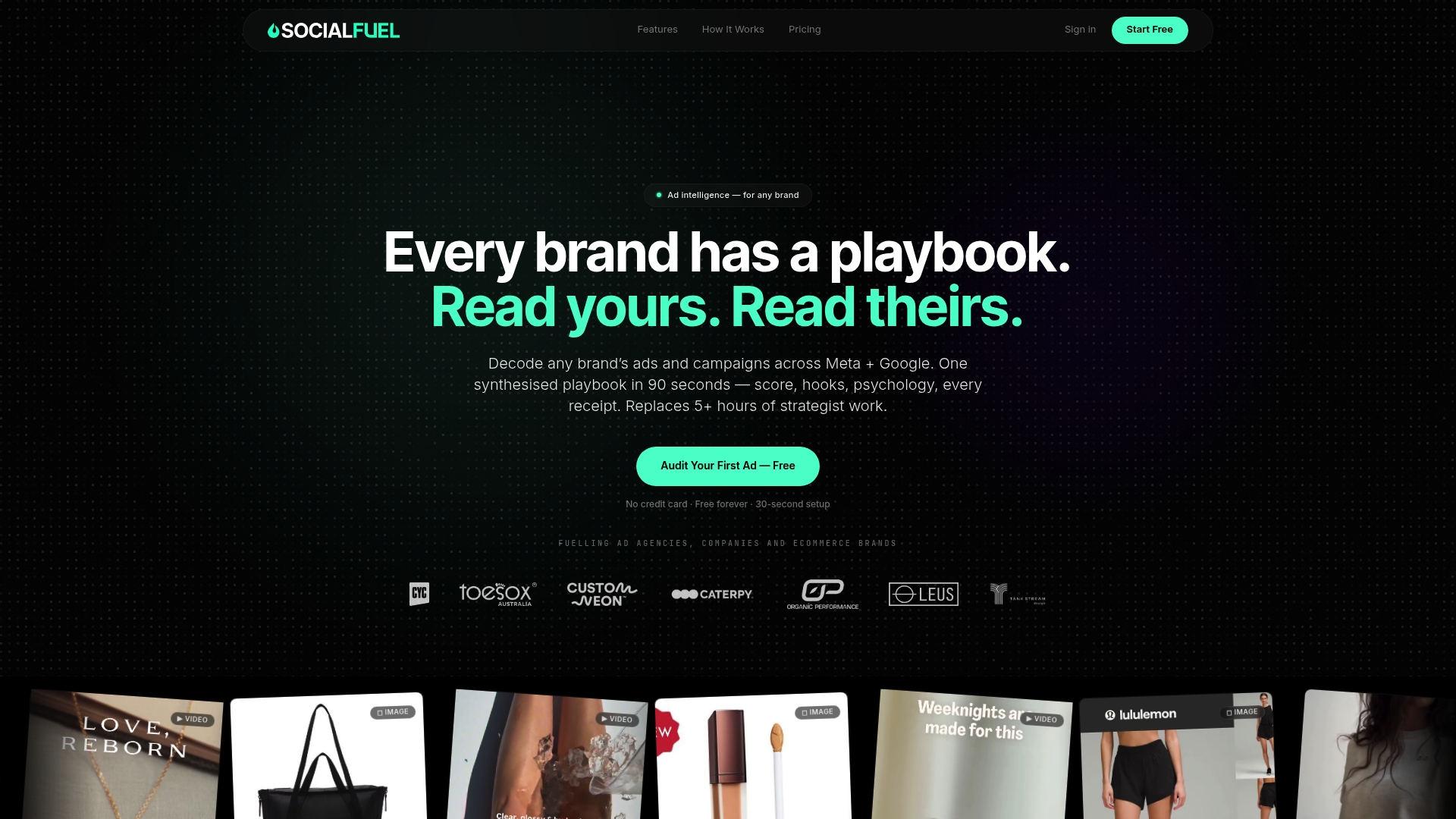
Socialfuel gives you direct access to winning Facebook and Instagram ad campaigns across the insurance and financial services space. Search any keyword or brand to pull live and historical ads, decode the hooks and copy angles driving performance, and build your own swipe file of proven creative. Whether you are building your first life insurance campaign or refining a mature one, Socialfuel’s ad intelligence platform cuts the guesswork out of creative strategy and helps you ship higher-converting campaigns faster.
FAQ
What budget do I need to start life insurance Facebook ads?
Budget at least $20–$30 per ad set per day and run each campaign for a minimum of 7–10 days. This gives Meta’s algorithm enough data to exit the learning phase and optimize delivery effectively.
Do life insurance ads require a Special Ad Category on Facebook?
Yes. Life insurance ads fall under Facebook’s Special Ad Category for financial products. This restricts certain audience targeting options and requires that your creative avoids discriminatory or misleading claims.
How do I improve lead quality from Facebook lead forms?
Add 2–3 qualifying questions to your lead form and switch to the Higher Intent form type. This combination reduces low-intent submissions and can double the quality of leads entering your pipeline.
How quickly should I follow up with Facebook insurance leads?
Contact leads within five minutes of form submission. Leads reached within this window convert at significantly higher rates than those followed up hours later.
How long does it take for life insurance Facebook campaigns to show results?
Expect 4–6 months of consistent activity before brand recognition drives inbound leads. Early campaigns should be treated as data collection phases, with optimization decisions based on qualified lead rate rather than raw lead volume.